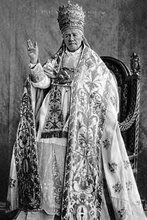
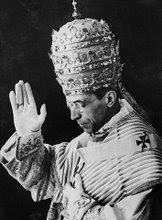
The following encyclical, written by Pope Leo XIII of blessed memory, is a must read for Catholics today. This encyclical should not just be read: it should be studied and learned, for it clearly distinguished between true and false liberty, and refutes the false liberty - which is in reality license - promoted by the "liberals".
.
"But many there are" declares the Pope, "who follow in the footsteps of Lucifer, and adopt as their own his rebellious cry, 'I will not serve'; and consequently substitute for true liberty what is sheer and most foolish license. Such, for instance, are the men belonging to that widely spread and powerful organization, who, usurping the name of liberty, style themselves liberals".
.
In our day, when even the conservatives have become liberals, this encyclical is more necessary than ever. Indeed, when one learns and meditates upon the truths contained in this magisterial text, on many points the foggy haze of liberalism is dispelled by the light; the cloud of ambiguity is replaced by the certitude of truth; and at last one begins to see just how far our socieity - and even many within the Church - have strayed from the truth.
.
LIBERTAS PRAESTANTISSIMUM
ON THE NATURE OFHUMAN LIBERTY
By POPE LEO XIII
To the Patriarchs, Primates, Archbishops, and Bishops of the Catholic World in Grace and Communion with the Apostolic See.
Liberty, the highest of natural endowments, being the portion only of intellectual or rational natures, confers on man this dignity-that he is "in the hand of his counsel"(1) and has power over his actions. But the manner in which such dignity is exercised is of the greatest moment, inasmuch as on the use that is made of liberty the highest good and the greatest evil alike depend. Man, indeed, is free to obey his reason, to seek moral good, and to strive unswervingly after his last end. Yet he is free also to turn aside to all other things; and, in pursuing the empty semblance of good, to disturb rightful order and to fall headlong into the destruction which he has voluntarily chosen. The Redeemer of mankind, Jesus Christ, having restored and exalted the original dignity of nature, vouchsafed special assistance to the will of man; and by the gifts of His grace here, and the promise of heavenly bliss hereafter, He raised it to a nobler state. In like manner, this great gift of nature has ever been, and always will be, deservingly cherished by the Catholic Church, for to her alone has been committed the charge of handing down to all ages the benefits purchased for us by Jesus Christ. Yet there are many who imagine that the Church is hostile to human liberty. Having a false and absurd notion as to what liberty is, either they pervert the very idea of freedom, or they extend it at their pleasure to many things in respect of which man cannot rightly be regarded as free.
2. We have on other occasions, and especially in Our encyclical letter Immortale Dei,(2) in treating of the so-called modern liberties, distinguished between their good and evil elements; and We have shown that whatsoever is good in those liberties is as ancient as truth itself, and that the Church has always most willingly approved and practiced that good: but whatsoever has been added as new is, to tell the plain truth, of a vitiated kind, the fruit of the disorders of the age, and of an insatiate longing after novelties. Seeing, however, that many cling so obstinately to their own opinion in this matter as to imagine these modern liberties, cankered as they are, to be the greatest glory of our age, and the very basis of civil life, without which no perfect government can be conceived, We feel it a pressing duty, for the sake of the common good, to treat separately of this subject.
3. It is with moral liberty, whether in individuals or in communities, that We proceed at once to deal. But, first of all, it will be well to speak briefly of natural liberty; for, though it is distinct and separate from moral liberty, natural freedom is the fountainhead from which liberty of whatsoever kind flows, sua vi suaque sponte. The unanimous consent and judgment of men, which is the trusty voice of nature, recognizes this natural liberty in those only who are endowed with intelligence or reason; and it is by his use of this that man is rightly regarded as responsible for his actions. For, while other animate creatures follow their senses, seeking good and avoiding evil only by instinct, man has reason to guide him in each and every act of his life. Reason sees that whatever things that are held to be good upon earth may exist or may not, and discerning that none of them are of necessity for us, it leaves the will free to choose what it pleases. But man can judge of this contingency, as We say, only because he has a soul that is simple, spiritual, and intellectual-a soul, therefore, which is not produced by matter, and does not depend on matter for its existence; but which is created immediately by God, and, far surpassing the condition of things material, has a life and action of its own so that, knowing the unchangeable and necessary reasons of what is true and good, it sees that no particular kind of good is necessary to us. When, therefore, it is established that man's soul is immortal and endowed with reason and not bound up with things material, the foundation of natural liberty is at once most firmly laid.
4. As the Catholic Church declares in the strongest terms the simplicity, spirituality, and immortality of the soul, so with unequalled constancy and publicity she ever also asserts its freedom. These truths she has always taught, and has sustained them as a dogma of faith, and whensoever heretics or innovators have attacked the liberty of man, the Church has defended it and protected this noble possession from destruction. History bears witness to the energy with which she met the fury of the Manichaeans and others like them; and the earnestness with which in later years she defended human liberty at the Council of Trent, and against the followers of Jansenius, is known to all. At no time, and in no place, has she held truce with fatalism.
5. Liberty, then, as We have said, belongs only to those who have the gift of reason or intelligence. Considered as to its nature, it is the faculty of choosing means fitted for the end proposed, for he is master of his actions who can choose one thing out of many. Now, since everything chosen as a means is viewed as good or useful, and since good, as such, is the proper object of our desire, it follows that freedom of choice is a property of the will, or, rather, is identical with the will in so far as it has in its action the faculty of choice. But the will cannot proceed to act until it is enlightened by the knowledge possessed by the intellect. In other words, the good wished by the will is necessarily good in so far as it is known by the intellect; and this the more, because in all voluntary acts choice is subsequent to a judgment upon the truth of the good presented, declaring to which good preference should be given. No sensible man can doubt that judgment is an act of reason, not of the will. The end, or object, both of the rational will and of its liberty is that good only which is in conformity with reason.
6. Since, however, both these faculties are imperfect, it is possible, as is often seen, that the reason should propose something which is not really good, but which has the appearance of good, and that the will should choose accordingly. For, as the possibility of error, and actual error, are defects of the mind and attest its imperfection, so the pursuit of what has a false appearance of good, though a proof of our freedom, just as a disease is a proof of our vitality, implies defect in human liberty. The will also, simply because of its dependence on the reason, no sooner desires anything contrary thereto than it abuses its freedom of choice and corrupts its very essence. Thus it is that the infinitely perfect God, although supremely free, because of the supremacy of His intellect and of His essential goodness, nevertheless cannot choose evil; neither can the angels and saints, who enjoy the beatific vision. St. Augustine and others urged most admirably against the Pelagians that, if the possibility of deflection from good belonged to the essence or perfection of liberty, then God, Jesus Christ, and the angels and saints, who have not this power, would have no liberty at all, or would have less liberty than man has in his state of pilgrimage and imperfection. This subject is often discussed by the Angelic Doctor in his demonstration that the possibility of sinning is not freedom, but slavery. It will suffice to quote his subtle commentary on the words of our Lord: "Whosoever committeth sin is the slave of sin."(3) "Everything," he says, "is that which belongs to it a naturally. When, therefore, it acts through a power outside itself, it does not act of itself, but through another, that is, as a slave. But man is by nature rational. When, therefore, he acts according to reason, he acts of himself and according to his free will; and this is liberty. Whereas, when he sins, he acts in opposition to reason, is moved by another, and is the victim of foreign misapprehensions. Therefore, `Whosoever committeth sin is the slave of sin.' "(4) Even the heathen philosophers clearly recognized this truth, especially they who held that the wise man alone is free; and by the term "wise man" was meant, as is well known, the man trained to live in accordance with his nature, that is, in justice and virtue.
7. Such, then, being the condition of human liberty, it necessarily stands in need of light and strength to direct its actions to good and to restrain them from evil. Without this, the freedom of our will would be our ruin. First of all, there must be law; that is, a fixed rule of teaching what is to be done and what is to be left undone. This rule cannot affect the lower animals in any true sense, since they act of necessity, following their natural instinct, and cannot of themselves act in any other way. On the other hand, as was said above, he who is free can either act or not act, can do this or do that, as he pleases, because his judgment precedes his choice. And his judgment not only decides what is right or wrong of its own nature, but also what is practically good and therefore to be chosen, and what is practically evil and therefore to be avoided. In other words, the reason prescribes to the will what it should seek after or shun, in order to the eventual attainment of man's last end, for the sake of which all his actions ought to be performed. This i ordination of reason is called law. In man's free will, therefore, or in the moral necessity of our voluntary acts being in accordance with reason, lies the very root of the necessity of law. Nothing more foolish can be uttered or conceived than the notion that, because man is free by nature, he is therefore exempt from law. Were this the case, it would follow that to become free we must be deprived of reason; whereas the truth is that we are bound to submit to law precisely because we are free by our very nature. For, law is the guide of man's actions; it turns him toward good by its rewards, and deters him from evil by its punishments.
8. Foremost in this office comes the natural law, which is written and engraved in the mind of every man; and this is nothing but our reason, commanding us to do right and forbidding sin. Nevertheless, all prescriptions of human reason can have force of law only inasmuch as they are the voice and the interpreters of some higher power on which our reason and liberty necessarily depend. For, since the force of law consists in the imposing of obligations and the granting of rights, authority is the one and only foundation of all law-the power, that is, of fixing duties and defining rights, as also of assigning the necessary sanctions of reward and chastisement to each and all of its commands. But all this, clearly, cannot be found in man, if, as his own supreme legislator, he is to be the rule of his own actions. It follows, therefore, that the law of nature is the same thing as the eternal law, implanted in rational creatures, and inclining them to their right action and end; and can be nothing else bur the eternal reason of God, the Creator and Ruler of all the world. To this rule of action and restraint of evil God has vouchsafed to give special and most suitable aids for strengthening and ordering the human will. The first and most excellent of these is the power of His divine grace, whereby the mind can be enlightened and the will wholesomely invigorated and moved to the constant pursuit of moral good, so that the use of our inborn liberty becomes at once less difficult and less dangerous. Not that the divine assistance hinders in any way the free movement of our will; just the contrary, for grace works inwardly in man and in harmony with his natural inclinations, since it flows from the very Creator of his mind and will, by whom all things are moved in conformity with their nature. As the Angelic Doctor points out, it is because divine grace comes from the Author of nature that it is so admirably adapted to be the safeguard of all natures, and to maintain the character, efficiency, and operations of each.
9. What has been said of the liberty of individuals is no less applicable to them when considered as bound together in civil society. For, what reason and the natural law do for individuals, that human law, promulgated for their good, does for the citizens of States. Of the laws enacted by men, some are concerned with what is good or bad by its very nature; and they command men to follow after what is right and to shun what is wrong, adding at the same time a suitable sanction. But such laws by no means derive their origin from civil society, because, just as civil society did not create human nature, so neither can it be said to be the author of the good which befits human nature, or of the evil which is contrary to it. Laws come before men live together in society, and have their origin in the natural, and consequently in the eternal, law. The precepts, therefore, of the natural law, contained bodily in the laws of men, have not merely the force of human law, but they possess that higher and more august sanction which belongs to the law of nature and the eternal law. And within the sphere of this kind of laws the duty of the civil legislator is, mainly, to keep the community in obedience by the adoption of a common discipline and by putting restraint upon refractory and viciously inclined men, so that, deterred from evil, they may turn to what is good, or at any rate may avoid causing trouble and disturbance to the State. Now, there are other enactments of the civil authority, which do not follow directly, but somewhat remotely, from the natural law, and decide many points which the law of nature treats only in a general and indefinite way. For instance, though nature commands all to contribute to the public peace and prosperity, whatever belongs to the manner, and circumstances, and conditions under which such service is to be rendered must be determined by the wisdom of men and not by nature herself. It is in the constitution of these particular rules of life, suggested by reason and prudence, and put forth by competent authority, that human law, properly so called, consists, binding all citizens to work together for the attainment of the common end proposed to the community, and forbidding them to depart from this end, and, in so far as human law is in conformity with the dictates of nature, leading to what is good, and deterring from evil.
10. From this it is manifest that the eternal law of God is the sole standard and rule of human liberty, not only in each individual man, but also in the community and civil society which men constitute when united. Therefore, the true liberty of human society does not consist in every man doing what he pleases, for this would simply end in turmoil and confusion, and bring on the overthrow of the State; but rather in this, that through the injunctions of the civil law all may more easily conform to the prescriptions of the eternal law. Likewise, the liberty of those who are in authority does not consist in the power to lay unreasonable and capricious commands upon their subjects, which would equally be criminal and would lead to the ruin of the commonwealth; but the binding force of human laws is in this, that they are to be regarded as applications of the eternal law, and incapable of sanctioning anything which is not contained in the eternal law, as in the principle of all law. Thus, St. Augustine most wisely says: "I think that you can see, at the same time, that there is nothing just and lawful in that temporal law, unless what men have gathered from this eternal law."(5) If, then, by anyone in authority, something be sanctioned out of conformity with the principles of right reason, and consequently hurtful to the commonwealth, such an enactment can have no binding force of law, as being no rule of justice, but certain to lead men away from that good which is the very end of civil society.
11. Therefore, the nature of human liberty, however it be considered, whether in individuals or in society, whether in those who command or in those who obey, supposes the necessity of obedience to some supreme and eternal law, which is no other than the authority of God, commanding good and forbidding evil. And, so far from this most just authority of God over men diminishing, or even destroying their liberty, it protects and perfects it, for the real perfection of all creatures is found in the prosecution and attainment of their respective ends; but the supreme end to which human liberty must aspire is God.
12. These precepts of the truest and highest teaching, made known to us by the light of reason itself, the Church, instructed by the example and doctrine of her divine Author, has ever propagated and asserted; for she has ever made them the measure of her office and of her teaching to the Christian nations. As to morals, the laws of the Gospel not only immeasurably surpass the wisdom of the heathen, but are an invitation and an introduction to a state of holiness unknown to the ancients; and, bringing man nearer to God, they make him at once the possessor of a more perfect liberty. Thus, the powerful influence of the Church has ever been manifested in the custody and protection of the civil and political liberty of the people. The enumeration of its merits in this respect does not belong to our present purpose. It is sufficient to recall the fact that slavery, that old reproach of the heathen nations, was mainly abolished by the beneficent efforts of the Church. The impartiality of law and the true brotherhood of man were first asserted by Jesus Christ; and His apostles re-echoed His voice when they declared that in future there was to be neither Jew, nor Gentile, nor barbarian, nor Scythian, but all were brothers in Christ. So powerful, so conspicuous, in this respect is the influence of the Church that experience abundantly testifies how savage customs are no longer possible in any land where she has once set her foot; but that gentleness speedily takes the place of cruelty, and the light of truth quickly dispels the darkness of barbarism. Nor has the Church been less lavish in the benefits she has conferred on civilized nations in every age, either by resisting the tyranny of the wicked, or by protecting the innocent and helpless from injury, or, finally, by using her influence in the support of any form of government which commended itself to the citizens at home, because of its justice, or was feared by their enemies without, because of its power.
13. Moreover, the highest duty is to respect authority, and obediently to submit to just law; and by this the members of a community are effectually protected from the wrong-doing of evil men. Lawful power is from God, "and whosoever resisteth authority resisteth the ordinance of God' ;(6) wherefore, obedience is greatly ennobled when subjected to an authority which is the most just and supreme of all. But where the power to command is wanting, or where a law is enacted contrary to reason, or to the eternal law, or to some ordinance of God, obedience is unlawful, lest, while obeying man, we become disobedient to God. Thus, an effectual barrier being opposed to tyranny, the authority in the State will not have all its own way, but the interests and rights of all will be safeguarded-the rights of individuals, of domestic society, and of all the members of the commonwealth; all being free to live according to law and right reason; and in this, as We have shown, true liberty really consists.
14. If when men discuss the question of liberty they were careful to grasp its true and legitimate meaning, such as reason and reasoning have just explained, they would never venture to affix such a calumny on the Church as to assert that she is the foe of individual and public liberty. But many there are who follow in the footsteps of Lucifer, and adopt as their own his rebellious cry, "I will not serve"; and consequently substitute for true liberty what is sheer and most foolish license. Such, for instance, are the men belonging to that widely spread and powerful organization, who, usurping the name of liberty, style themselves liberals.
15. What naturalists or rationalists aim at in philosophy, that the supporters of Liberalism, carrying out the principles laid down by naturalism, are attempting in the domain of morality and politics. The fundamental doctrine of rationalism is the supremacy of the human reason, which, refusing due submission to the divine and eternal reason, proclaims its own independence, and constitutes itself the supreme principle and source and judge of truth. Hence, these followers of liberalism deny the existence of any divine authority to which obedience is due, and proclaim that every man is the law to himself; from which arises that ethical system which they style independent morality, and which, under the guise of liberty, exonerates man from any obedience to the commands of God, and substitutes a boundless license. The end of all this it is not dif ficult to foresee, especially when society is in question. For, when once man is firmly persuaded that he is subject to no one, it follows that the efficient cause of the unity of civil society is not to be sought in any principle external to man, or superior to him, but simply in the free will of individuals; that the authority in the State comes from the people only; and that, just as every man's individual reason is his only rule of life, so the collective reason of the community should be the supreme guide in the management of all public affairs. Hence the doctrine of the supremacy of the greater number, and that all right and all duty reside in the majority. But, from what has been said, it is clear that all this is in contradiction to reason. To refuse any bond of union between man and civil society, on the one hand, and God the Creator and consequently the supreme Law-giver, on the other, is plainly repugnant to the nature, not only of man, but of all created things; for, of necessity, all effects must in some proper way be connected with their cause; and it belongs to the perfection of every nature to contain itself within that sphere and grade which the order of nature has assigned to it, namely, that the lower should be subject and obedient to the higher.
16. Moreover, besides this, a doctrine of such character is most hurtful both to individuals and to the State. For, once ascribe to human reason the only authority to decide what is true and what is good, and the real distinction between good and evil is destroyed; honor and dishonor differ not in their nature, but in the opinion and judgment of each one; pleasure is the measure of what is lawful; and, given a code of morality which can have little or no power to restrain or quiet the unruly propensities of man, a way is naturally opened to universal corruption. With reference also to public affairs: authority is severed from the true and natural principle whence it derives all its efficacy for the common good; and the law determining what it is right to do and avoid doing is at the mercy of a majority. Now, this is simply a road leading straight to tyranny. The empire of God over man and civil society once repudiated, it follows that religion, as a public institution, can have no claim to exist, and that everything that belongs to religion will be treated with complete indifference. Furthermore, with ambitious designs on sovereignty, tumult and sedition will be common amongst the people; and when duty and conscience cease to appeal to them, there will be nothing to hold them back but force, which of itself alone is powerless to keep their covetousness in check. Of this we have almost daily evidence in the conflict with socialists and members of other seditious societies, who labor unceasingly to bring about revolution. It is for those, then, who are capable of forming a just estimate of things to decide whether such doctrines promote that true liberty which alone is worthy of man, or rather, pervert and destroy it.
17. There are, indeed, some adherents of liberalism who do not subscribe to these opinions, which we have seen to be fearful in their enormity, openly opposed to the truth, and the cause of most terrible evils. Indeed, very many amongst them, compelled by the force of truth, do not hesitate to admit that such liberty is vicious, nay, is simple license, whenever intemperate in its claims, to the neglect of truth and justice; and therefore they would have liberty ruled and directed by right reason, and consequently subject to the natural law and to the divine eternal law. But here they think they may stop, holding that man as a free being is bound by no law of God except such as He makes known to us through our natural reason. In this they are plainly inconsistent. For if-as they must admit, and no one can rightly deny-the will of the Divine Law-giver is to be obeyed, because every man is under the power of God, and tends toward Him as his end, it follows that no one can assign limits to His legislative authority without failing in the obedience which is due. Indeed, if the human mind be so presumptuous as to define the nature and extent of God's rights and its own duties, reverence for the divine law will be apparent rather than real, and arbitrary judgment will prevail over the authority and providence of God. Man must, therefore, take his standard of a loyal and religious life from the eternal law; and from all and every one of those laws which God, in His infinite wisdom and power, has been pleased to enact, and to make known to us by such clear and unmistakable signs as to leave no room for doubt. And the more so because laws of this kind have the same origin, the same author, as the eternal law, are absolutely in accordance with right reason, and perfect the natural law. These laws it is that embody the government of God, who graciously guides and directs the intellect and the will of man lest these fall into error. Let, then, that continue to remain in a holy and inviolable union which neither can nor should be separated; and in all things-for this is the dictate of right reason itself-let God be dutifully and obediently served.
18. There are others, somewhat more moderate though not more consistent, who affirm that the morality of individuals is to be guided by the divine law, but not the morality of the State, for that in public affairs the commands of God may be passed over, and may be entirely disregarded in the framing of laws. Hence follows the fatal theory of the need of separation between Church and State. But the absurdity of such a position is manifest. Nature herself proclaims the necessity of the State providing means and opportunities whereby the community may be enabled to live properly, that is to say, according to the laws of God. For, since God is the source of all goodness and justice, it is absolutely ridiculous that the State should pay no attention to these laws or render them abortive by contrary enact menu. Besides, those who are in authority owe it to the commonwealth not only to provide for its external well-being and the conveniences of life, but still more to consult the welfare of men's souls in the wisdom of their legislation. But, for the increase of such benefits, nothing more suitable can be conceived than the laws which have God for their author; and, therefore, they who in their government of the State take no account of these laws abuse political power by causing it to deviate from its proper end and from what nature itself prescribes. And, what is still more important, and what We have more than once pointed out, although the civil authority has not the same proximate end as the spiritual, nor proceeds on the same lines, nevertheless in the exercise of their separate powers they must occasionally meet. For their subjects are the same, and not infrequently they deal with the same objects, though in different ways. Whenever this occurs, since a state of conflict is absurd and manifestly repugnant to the most wise ordinance of God, there must necessarily exist some order or mode of procedure to remove the occasions of difference and contention, and to secure harmony in all things. This harmony has been not inaptly compared to that which exists between the body and the soul for the well-being of both one and the other, the separation of which brings irremediable harm to the body, since it extinguishes its very life.
19. To make this more evident, the growth of liberty ascribed to our age must be considered apart in its various details. And, first, let us examine that liberty in individuals which is so opposed to the virtue of religion, namely, the liberty of worship, as it is called. This is based on the principle that every man is free to profess as he may choose any religion or none.
20. But, assuredly, of all the duties which man has to fulfill, that, without doubt, is the chiefest and holiest which commands him to worship God with devotion and piety. This follows of necessity from the truth that we are ever in the power of God, are ever guided by His will and providence, and, having come forth from Him, must return to Him. Add to which, no true virtue can exist without religion, for moral virtue is concerned with those things which lead to God as man's supreme and ultimate good; and therefore religion, which (as St. Thomas says) "performs those actions which are directly and immediately ordained for the divine honor",(7) rules and tempers all virtues. And if it be asked which of the many conflicting religions it is necessary to adopt, reason and the natural law unhesitatingly tell us to practice that one which God enjoins, and which men can easily recognize by certain exterior notes, whereby Divine Providence has willed that it should be distinguished, because, in a matter of such moment, the most terrible loss would be the consequence of error. Wherefore, when a liberty such as We have described is offered to man, the power is given him to pervert or abandon with impunity the most sacred of duties, and to exchange the unchangeable good for evil; which, as We have said, is no liberty, but its degradation, and the abject submission of the soul to sin.
21. This kind of liberty, if considered in relation to the State, clearly implies that there is no reason why the State should offer any homage to God, or should desire any public recognition of Him; that no one form of worship is to be preferred to another, but that all stand on an equal footing, no account being taken of the religion of the people, even if they profess the Catholic faith. But, to justify this, it must needs be taken as true that the State has no duties toward God, or that such duties, if they exist, can be abandoned with impunity, both of which assertions are manifestly false. For it cannot be doubted but that, by the will of God, men are united in civil society; whether its component parts be considered; or its form, which implies authority; or the object of its existence; or the abundance of the vast services which it renders to man. God it is who has made man for society, and has placed him in the company of others like himself, so that what was wanting to his nature, and beyond his attainment if left to his own resources, he might obtain by association with others. Wherefore, civil society must acknowledge God as its Founder and Parent, and must obey and reverence His power and authority. Justice therefore forbids, and reason itself forbids, the State to be godless; or to adopt a line of action which would end in godlessness-namely, to treat the various religions (as they call them) alike, and to bestow upon them promiscuously equal rights and privileges. Since, then, the profession of one religion is necessary in the State, that religion must be professed which alone is true, and which can be recognized without difficulty, especially in Catholic States, because the marks of truth are, as it were, engravers upon it. This religion, therefore, the rulers of the State must preserve and protect, if they would provide - as they should do - with prudence and usefulness for the good of the community. For public authority exists for the welfare of those whom it governs; and, although its proximate end is to lead men to the prosperity found in this life, yet, in so doing, it ought not to diminish, but rather to increase, man's capability of attaining to the supreme good in which his everlasting happiness consists: which never can be attained if religion be disregarded.
22. All this, however, We have explained more fully elsewhere. We now only wish to add the remark that liberty of so false a nature is greatly hurtful to the true liberty of both rulers and their subjects. Religion, of its essence, is wonderfully helpful to the State. For, since it derives the prime origin of all power directly from God Himself, with grave authority it charges rulers to be mindful of their duty, to govern without injustice or severity, to rule their people kindly and with almost paternal charity; it admonishes subjects to be obedient to lawful authority, as to the ministers of God; and it binds them to their rulers, not merely by obedience, but by reverence and affection, forbidding all seditious and venturesome enterprises calculated to disturb public order and tranquillity, and cause greater restrictions to be put upon the liberty of the people. We need not mention how greatly religion conduces to pure morals, and pure morals to liberty. Reason shows, and history confirms the fact, that the higher the morality of States; the greater are the liberty and wealth and power which they enjoy.
23. We must now consider briefly liberty of speech, and liberty of the press. It is hardly necessary to say that there can be no such right as this, if it be not used in moderation, and if it pass beyond the bounds and end of all true liberty. For right is a moral power which-as We have before said and must again and again repeat-it is absurd to suppose that nature has accorded indifferently to truth and falsehood, to justice and injustice. Men have a right freely and prudently to propagate throughout the State what things soever are true and honorable, so that as many as possible may possess them; but lying opinions, than which no mental plague is greater, and vices which corrupt the heart and moral life should be diligently repressed by public authority, lest they insidiously work the ruin of the State. The excesses of an unbridled intellect, which unfailingly end in the oppression of the untutored multitude, are no less rightly controlled by the authority of the law than are the injuries inflicted by violence upon the weak. And this all the more surely, because by far the greater part of the community is either absolutely unable, or able only with great difficulty, to escape from illusions and deceitful subtleties, especially such as flatter the passions. If unbridled license of speech and of writing be granted to all, nothing will remain sacred and inviolate; even the highest and truest mandates of natures, justly held to be the common and noblest heritage of the human race, will not be spared. Thus, truth being gradually obscured by darkness, pernicious and manifold error, as too often happens, will easily prevail. Thus, too, license will gain what liberty loses; for liberty will ever be more free and secure in proportion as license is kept in fuller restraint. In regard, however, to all matter of opinion which God leaves to man's free discussion, full liberty of thought and of speech is naturally within the right of everyone; for such liberty never leads men to suppress the truth, but often to discover it and make it known.
24. A like judgment must be passed upon what is called liberty of teaching. There can be no doubt that truth alone should imbue the minds of men, for in it are found the well-being, the end, and the perfection of every intelligent nature; and therefore nothing but truth should be taught both to the ignorant and to the educated, so as to bring knowledge to those who have it not, and to preserve it in those who possess it. For this reason it is plainly the duty of all who teach to banish error from the mind, and by sure safeguards to close the entry to all false convictions. From this it follows, as is evident, that the liberty of which We have been speaking is greatly opposed to reason, and tends absolutely to pervert men's minds, in as much as it claims for itself the right of teaching whatever it pleases-a liberty which the State cannot grant without failing in its duty. And the more so because the authority of teachers has great weight with their hearers, who can rarely decide for themselves as to the truth or falsehood of the instruction given to them.
25. Wherefore, this liberty, also, in order that it may deserve the name, must be kept within certain limits, lest the office of teaching be turned with impunity into an instrument of corruption. Now, truth, which should be the only subject matter of those who teach, is of two kinds: natural and supernatural. Of natural truths, such as the principles of nature and whatever is derived from them immediately by our reason, there is a kind of common patrimony in the human race. On this, as on a firm basis, morality, justice, religion, and the very bonds of human society rest: and to allow people to go unharmed who violate or destroy it would be most impious, most foolish, and most inhuman.
26. But with no less religious care must we preserve that great and sacred treasure of the truths which God Himself has taught us. By many and convincing arguments, often used by defenders of Christianity, certain leading truths have been laid down: namely, that some things have been revealed by God; that the onlybegotten Son of God was made flesh, to bear witness to the truth; that a perfect society was founded by Him-the Church, namely, of which He is the head, and with which He has promised to abide till the end of the world. To this society He entrusted all the truths which He had taught, in order that it might keep and guard them and with lawful authority explain them; and at the same time He commanded all nations to hear the voice of the Church, as if it were His own, threatening those who would nor hear it with everlasting perdition. Thus, it is manifest that man's best and surest teacher is God, the Source and Principle of all truth; and the only-begotten Son, who is in the bosom of the Father, the Way, the Truth, and the Life, the true Light which enlightens every man, and to whose teaching all must submit: "And they shall all be taught of God."(8)
27. In faith and in the teaching of morality, God Himself made the Church a partaker of His divine authority, and through His heavenly gift she cannot be deceived. She is therefore the greatest and most reliable teacher of mankind, and in her swells an inviolable right to teach them. Sustained by the truth received from her divine Founder, the Church has ever sought to fulfill holily the mission entrusted to her by God; unconquered by the difficulties on all sides surrounding her, she has never ceased to assert her liberty of teaching, and in this way the wretched superstition of paganism being dispelled, the wide world was renewed unto Christian wisdom. Now, reason itself clearly teaches that the truths of divine revelation and those of nature cannot really be opposed to one another, and that whatever is at variance with them must necessarily be false. Therefore, the divine teaching of the Church, so far from being an obstacle to the pursuit of learning and the progress of science, or in any way retarding the advance of civilization, in reality brings to them the sure guidance of shining light. And for the same reason it is of no small advantage for the perfecting of human liberty, since our Saviour Jesus Christ has said that by truth is man made free: "You shall know the truth, and the truth shall make you free."(9) Therefore, there is no reason why genuine liberty should grow indignant, or true science feel aggrieved, at having to bear the just and necessary restraint of laws by which, in the judgment of the Church and of reason itself, human teaching has to be controlled.
28, The Church, indeed-as facts have everywhere proved-looks chiefly and above all to the defense of the Christian faith, while careful at the same time to foster and promote every kind of human learning. For learning is in itself good, and praiseworthy, and desirable; and further, all erudition which is the outgrowth of sound reason, and in conformity with the truth of things, serves not a little to confirm what we believe on the authority of God. The Church, truly, to our great benefit, has carefully preserved the monuments of ancient wisdom; has opened everywhere homes of science, and has urged on intellectual progress by fostering most diligently the arts by which the culture of our age is so much advanced. Lastly, we must not forget that a vast field lies freely open to man's industry and genius, containing all those things which have no necessary connection with Christian faith and morals, or as to which the Church, exercising no authority, leaves the judgment of the learned free and unconstrained.
29. From all this may be understood the nature and character of that liberty which the followers of liberalism so eagerly advocate and proclaim. On the one hand, they demand for themselves and for the State a license which opens the way to every perversity of opinion; and on the other, they hamper the Church in divers ways, restricting her liberty within narrowest limits, although from her teaching not only is there nothing to be feared, but in every respect very much to be gained.
30. Another liberty is widely advocated, namely, liberty of conscience. If by this is meant that everyone may, as he chooses, worship God or not, it is sufficiently refuted by the arguments already adduced. But it may also be taken to mean that every man in the State may follow the will of God and, from a consciousness of duty and free from every obstacle, obey His commands. This, indeed, is true liberty, a liberty worthy of the sons of God, which nobly maintains the dignity of man and is stronger than all violence or wrong-a liberty which the Church has always desired and held most dear. This is the kind of liberty the Apostles claimed for themselves with intrepid constancy, which the apologists of Christianity confirmed by their writings, and which the martyrs in vast numbers consecrated by their blood. And deservedly so; for this Christian liberty bears witness to the absolute and most just dominion of God over man, and to the chief and supreme duty of man toward God. It has nothing in common with a seditious and rebellious mind; and in no tittle derogates from obedience to public authority; for the right to command and to require obedience exists only so far as it is in accordance with the authority of God, and is within the measure that He has laid down. But when anything is commanded which is plainly at variance with the will of God, there is a wide departure from this divinely constituted order, and at the same time a direct conflict with divine authority; therefore, it is right not to obey.
31. By the patrons of liberalism, however, who make the State absolute and omnipotent, and proclaim that man should live altogether independently of God, the liberty of which We speak, which goes hand in hand with virtue and religion, is not admitted; and whatever is done for its preservation is accounted an injury and an offense against the State. Indeed, if what they say were really true, there would be no tyranny, no matter how monstrous, which we should not be bound to endure and submit to.
32. The Church most earnestly desires that the Christian teaching, of which We have given an outline, should penetrate every rank of society in reality and in practice; for it would be of the greatest efficacy in healing the evils of our day, which are neither few nor slight, and are the off spring in great part of the false liberty which is so much extolled, and in which the germs of safety and glory were supposed to be contained. The hope has been disappointed by the result. The fruit, instead of being sweet and wholesome, has proved cankered and bitter. If, then, a remedy is desired, let it be sought for in a restoration of sound doctrine, from which alone the preservation of order and, as a consequence, the defense of true liberty can be confidently expected.
33. Yet, with the discernment of a true mother, the Church weighs the great burden of human weakness, and well knows the course down which the minds and actions of men are in this our age being borne. For this reason, while not conceding any right to anything save what is true and honest, she does not forbid public authority to tolerate what is at variance with truth and justice, for the sake of avoiding some greater evil, or of obtaining or preserving some greater good. God Himself in His providence, though infinitely good and powerful, permits evil to exist in the world, partly that greater good may not be impeded, and partly that greater evil may not ensue. In the government of States it is not forbidden to imitate the Ruler of the world; and, as the authority of man is powerless to prevent every evil, it has (as St. Augustine says) to overlook and leave unpunished many things which are punished, and rightly, by Divine Providence.(10) But if, in such circumstances, for the sake of the common good (and this is the only legitimate reason), human law may or even should tolerate evil, it may not and should not approve or desire evil for its own sake; for evil of itself, being a privation of good, is opposed to the common welfare which every legislator is bound to desire and defend to the best of his ability. In this, human law must endeavor to imitate God, who, as St. Thomas teaches, in allowing evil to exist in the world, "neither wills evil to be done, nor wills it not to be done, but wills only to permit it to be done; and this is good."(11) This saying of the Angelic Doctor contains briefly the whole doctrine of the permission of evil.
34. But, to judge aright, we must acknowledge that, the more a State is driven to tolerate evil, the further is it from perfection; and that the tolerance of evil which is dictated by political prudence should be strictly confined to the limits which its justifying cause, the public welfare, requires. Wherefore, if such tolerance would be injurious to the public welfare, and entail greater evils on the State, it would not be lawful; for in such case the motive of good is wanting. And although in the extraordinary condition of these times the Church usually acquiesces in certain modern liberties, not because she prefers them in themselves, but because she judges it expedient to permit them, she would in happier times exercise her own liberty; and, by persuasion, exhortation, and entreaty would endeavor, as she is bound, to fulfill the duty assigned to her by God of providing for the eternal salvation of mankind. One thing, however, remains always true-that the liberty which is claimed for all to do all things is not, as We have often said, of itself desirable, inasmuch as it is contrary to reason that error and truth should have equal rights.
35. And as to tolerance, it is surprising how far removed from the equity and prudence of the Church are those who profess what is called liberalism. For, in allowing that boundless license of which We have spoken, they exceed all limits, and end at last by making no apparent distinction between truth and error, honesty and dishonesty. And because the Church, the pillar and ground of truth, and the unerring teacher of morals, is forced utterly to reprobate and condemn tolerance of such an abandoned and criminal character, they calumniate her as being wanting in patience and gentleness, and thus fail to see that, in so doing, they impute to her as a fault what is in reality a matter for commendation. But, in spite of all this show of tolerance, it very often happens that, while they profess themselves ready to lavish liberty on all in the greatest profusion, they are utterly intolerant toward the Catholic Church, by refusing to allow her the liberty of being herself free.
36. And now to reduce for clearness' sake to its principal heads all that has been set forth with its immediate conclusions, the summing up in this briefly: that man, by a necessity of his nature, is wholly subject to the most faithful and everenduring power of God; and that, as a consequence, any liberty, except that which consists in submission to God and in subjection to His will, is unintelligible. To deny the existence of this authority in God, or to refuse to submit to it, means to act, not as a free man, but as one who treasonably abuses his liberty; and in such a disposition of mind the chief and deadly vice of liberalism essentially consists. The form, however, of the sin is manifold; for in more ways and degrees than one can the will depart from the obedience which is due to God or to those who share the divine power.
37. For, to reject the supreme authority to God, and to cast off all obedience to Him in public matters, or even in private and domestic affairs, is the greatest perversion of liberty and the worst kind of liberalism; and what We have said must be understood to apply to this alone in its fullest sense.
38. Next comes the system of those who admit indeed the duty of submitting to God, the Creator and Ruler of the world, inasmuch as all nature is dependent on His will, but who boldly reject all laws of faith and morals which are above natural reason, but are revealed by the authority of God; or who at least impudently assert that there is no reason why regard should be paid to these laws, at any rate publicly, by the State. How mistaken these men also are, and how inconsistent, we have seen above. From this teaching, as from its source and principle, flows that fatal principle of the separation of Church and State; whereas it is, on the contrary, clear that the two powers, though dissimilar in functions and unequal in degree, ought nevertheless to live in concord, by harmony in their action and the faithful discharge of their respective duties.
39. But this teaching is understood in two ways. Many wish the State to be separated from the Church wholly and entirely, so that with regard to every right of human society, in institutions, customs, and laws, the offices of State, and the education of youth, they would pay no more regard to the Church than if she did not exist; and, at most, would allow the citizens individually to attend to their religion in private if so minded. Against such as these, all the arguments by which We disprove the principle of separation of Church and State are conclusive; with this super-added, that it is absurd the citizen should respect the Church, while the State may hold her in contempt.
40. Others oppose not the existence of the Church, nor indeed could they; yet they despoil her of the nature and rights of a perfect society, and maintain that it does not belong to her to legislate, to judge, or to punish, but only to exhort, to advise, and to rule her subjects in accordance with their own consent and will. By such opinion they pervert the nature of this divine society, and attenuate and narrow its authority, its office of teacher, and its whole efficiency; and at the same time they aggrandize the poever of the civil government to such extent as to subject the Church of God to the empire and sway of the State, like any voluntary association of citizens. To refute completely such teaching, the arguments often used by the defenders of Christianity, and set forth by Us, especially in the encyclical letter Immortale Dei,(12) are of great avail; for by those arguments it is proved that, by a divine provision, all the rights which essentially belong to a society that is legitimate, supreme, and perfect in all its parts exist in the Church.
41. Lastly, there remain those who, while they do not approve the separation of Church and State, think nevertheless that the Church ought to adapt herself to the times and conform to what is required by the modern system of government. Such an opinion is sound, if it is to be understood of some equitable adjustment consistent with truth and justice; in so far, namely, that the Church, in the hope of some great good, may show herself indulgent, and may conform to the times in so far as her sacred office permits. But it is not so in regard to practices and doctrines which a perversion of morals and a warped judgment have unlawfully introduced. Religion, truth, and justice must ever be maintained; and, as God has intrusted these great and sacred matters to her office as to dissemble in regard to what is false or unjust, or to connive at what is hurtful to religion.
42. From what has been said it follows that it is quite unlawful to demand, to defend, or to grant unconditional freedom of thought, of speech, or writing, or of worship, as if these were so many rights given by nature to man. For, if nature had really granted them, it would be lawful to refuse obedience to God, and there would be no restraint on human liberty. It likewise follows that freedom in these things may be tolerated wherever there is just cause, but only with such moderation as will prevent its degenerating into license and excess. And, where such liberties are in use, men should employ them in doing good, and should estimate them as the Church does; for liberty is to be regarded as legitimate in so far only as it affords greater facility for doing good, but no farther.
43. Whenever there exists, or there is reason to fear, an unjust oppression of the people on the one hand, or a deprivation of the liberty of the Church on the other, it is lawful to seek for such a change of government as will bring about due liberty of action. In such case, an excessive and vicious liberty is not sought, but only some relief, for the common welfare, in order that, while license for evil is allowed by the State, the power of doing good may not be hindered.
44. Again, it is not of itself wrong to prefer a democratic form of government, if only the Catholic doctrine be maintained as to the origin and exercise of power. Of the various forms of government, the Church does not reject any that are fitted to procure the welfare of the subject; she wishes only-and this nature itself requires-that they should be constituted without involving wrong to any one, and especially without violating the rights of the Church.
45. Unless it be otherwise determined, by reason of some exceptional condition of things, it is expedient to take part in the administration of public affairs. And the Church approves of every one devoting his services to the common good, and doing all that he can for the defense, preservation, and prosperity of his country.
46. Neither does the Church condemn those who, if it can be done without violation of justice, wish to make their country independent of any foreign or despotic power. Nor does she blame those who wish to assign to the State the power of self-government, and to its citizens the greatest possible measure of prosperity. The Church has always most faithfully fostered civil liberty, and this was seen especially in Italy, in the municipal prosperity, and wealth, and glory which were obtained at a time when the salutary power of the Church has spread, without opposition, to all parts of the State.
47. These things, venerable brothers, which, under the guidance of faith and reason, in the discharge of Our Apostolic office, We have now delivered to you, We hope, especially by your cooperation with Us, will be useful unto very many. In lowliness of heart We raise Our eyes in supplication to God, and earnestly beseech Him to shed mercifully the light of His wisdom and of His counsel upon men, so that, strengthened by these heavenly gifts, they may in matters of such moment discern what is true, and may afterwards, in public and private at all times and with unshaken constancy, live in accordance with the truth. As a pledge of these heavenly gifts, and in witness of Our good will to you, venerable brothers, and to the clergy and people committed to each of you, We most lovingly grant in the Lord the apostolic benediction.
Given at St. Peter's in Rome, the twentieth day of June, 1888, the tenth year of Our Pontificate.
LEO XIII
REFERENCES:
I. Ecclus. 15:14.
2. See no. 93:37-38.
3. John 8:34.
4. Thomas Aquinas, On the Gospel of St. John, cap. viii, lect. 4, n. 3 (ed. Vives, Vol. 20 p. 95).
5. Augustine, De libero arbitrio, lib. I, cap. 6, n. 15 (PL 32, 1229).
6. Rom. 13:2.
7. Summa theologiae, Ila-IIae, q. Ixxxi, a. 6. Answer.
8. John 6:45.
9. John 8:32.
10. Augustine, De libero arbitrio, lib. I, cap. 6, n. 14 (PL 32, 1228).
11. Summa theologiae, la, q. xix, a. 9, ad 3m.
12. See no. 93:8-11.